What gluten actually is, what goes on a gluten-free plate, what you can't eat (including the places gluten hides) and how you'd know if you need to cut it out.
A friend came over for dinner last month, looked at the table and asked, half joking, “So what do you actually eat? Air?” There was a pot of chicken biryani in front of her. Raita, a big salad, a plate of pakoras fried in besan batter. Every single thing on that table was gluten-free. She just hadn't noticed.
That's the funny part about this diet. From the outside it looks like a long list of rules. From the inside it's mostly normal food, plus a handful of traps you learn to spot. The question I get asked more than any other is “what can a gluten free person eat?” and my honest answer is: nearly everything, once you know where gluten hides.
So let's go through it properly. What gluten is, what's on the plate, what's off it, and how you'd even know whether any of this applies to you.
Gluten meaning in food: what it actually is
If you've ever searched for the gluten meaning in food, here's the short version. Gluten is a group of proteins found in wheat, barley and rye. The word comes from the Latin for glue, which is honestly a pretty good description of what it does.
Mix wheat flour with water and the gluten proteins link up into a stretchy net. That net traps air, which is why bread rises and pizza dough pulls instead of crumbling.
That stretch is exactly why bakers love it. It's also why gluten turns up in places you'd never guess. It thickens sauces, binds sausages and kebabs, and gives some sweets their chew. Wheat flour is cheap and it does a lot of jobs, so food companies put it everywhere.
Rice, corn, potatoes and millet have their own proteins, but none of them behave like gluten, and none of them are a problem for people with celiac disease.
What can a gluten free person eat? More than you'd think
Here's how I think about a plate now. Don't start from bread and try to replace it. Start from the foods that never had gluten in them in the first place. It's a much longer list.
Grains & starches
Rice (every kind)
Potatoes & sweet potatoes
Corn & makki atta
Millet, jowar, bajra
Quinoa & buckwheat
Protein
Eggs
Chicken, meat & fish (not breaded)
Lentils & daal
Chickpeas & beans
Tofu & paneer
Fruit & veg
All fresh fruit
All fresh vegetables
Plain frozen veg
Nuts & seeds
Dairy & fats
Milk & yogurt
Most cheese
Butter & ghee
Cooking oils
Buckwheat confuses everyone because of the name, but it isn't wheat at all. It's a seed from the same plant family as rhubarb, and it makes lovely pancakes.
A lot of South Asian home cooking is naturally on the safe side, too. Daal, sabzi, rice, raita, besan cheela, chana chaat. The trouble starts with roti, naan and paratha, which are all wheat, and with ready-made masala mixes. Even hing (asafoetida) is often sold mixed with wheat flour, which surprised me the first time I read the back of the tin.
What can't you eat on gluten free diet? The obvious stuff and the sneaky stuff
When someone asks “what can't you eat on gluten free diet?” they're usually picturing bread and pasta. Those are the easy ones. The sneaky ones are what catch you out in the first few months.
The obvious ones
Made from wheat, barley or rye
Bread, roti, naan, paratha
Pasta and most noodles
Cakes, biscuits and pastries
Couscous, bulgur and suji (semolina)
Barley and rye
Beer and malted drinks
Anything breaded or battered
The sneaky ones
Check the label every time
Soy sauce (usually brewed with wheat)
Stock cubes and gravy mixes
Ready-made spice blends and hing
Malt vinegar
Sausages, kebabs and burgers with fillers
Sauces and soups thickened with flour
Seitan (it's pure wheat gluten)
Labels are where you'll spend most of your energy at first. Here's a made-up stock cube label, but a very typical one. Watch what the scanner picks up.
In the UK and EU, cereals containing gluten have to be highlighted in the ingredients list, usually in bold. In the US, wheat has to be named, but barley and rye aren't flagged the same way, so read the whole list.
Then there's cross-contact. A shared toaster, a fryer that also cooks battered fish, the wooden spoon that just stirred the pasta. If you have celiac disease, crumbs genuinely count, so it's worth having your own toaster and a separate butter dish.
Do you actually need to be gluten-free?
Most people who ask what a gluten-free person can eat are really asking a second question: do I need to be one? There are three main reasons someone reacts to gluten: celiac disease, non-celiac gluten sensitivity and wheat allergy. They feel alike but they're found and treated differently.
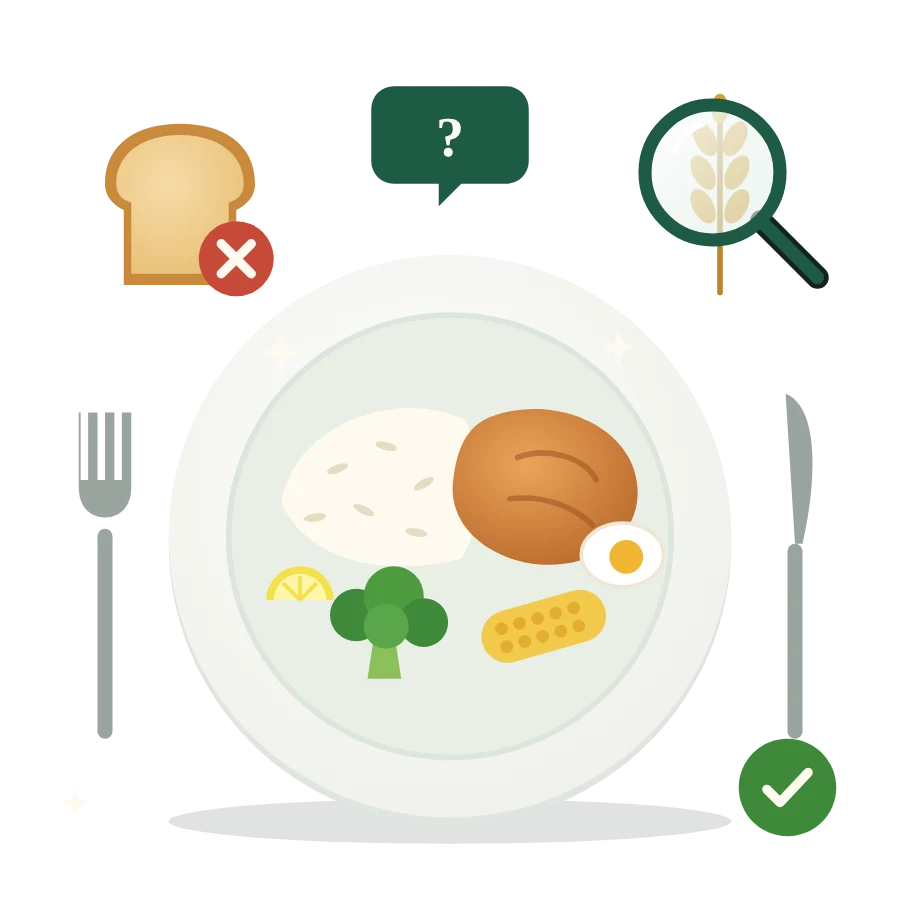
The most important thing to know is this: keep eating gluten until you've been tested. Celiac tests look for your body's reaction to gluten, so cutting it out first can make the results come back normal when they shouldn't. I've written a full guide to the signs of each condition and how testing works, step by step.
And if you meant the other question, how do you know if a food is gluten-free, look for a gluten-free label. In both the US and the EU, that label means the food has less than 20 parts per million of gluten, a level that's considered safe for most people with celiac disease.
Easy swaps that make it feel normal
The first month is mostly about swaps. After that you stop thinking about them.
Wheat rotiMakki or jowar roti
PastaRice noodles or gluten-free pasta
Soy sauceTamari labelled gluten-free
CouscousQuinoa or millet
Flour to thickenCornflour
BreadcrumbsCrushed rice crackers
BeerCider or wine
And when I want something crunchy that I didn't make myself, rice-based snacks are an easy win. Dang's Mango Sticky Rice chips are gluten-free and vegan, and they're one of the few packaged snacks I don't feel I need to interrogate.
So, what can a gluten free person eat? Rice, potatoes, corn, millet, eggs, meat, fish, lentils, beans, dairy, fruit, vegetables and a whole cupboard of spices. What's off the list is wheat, barley and rye, plus everything quietly made from them.
Learn the sneaky ones, read labels for a few weeks, and it stops feeling like a diet. It just feels like dinner. If money's the worry, I wrote a whole post on doing this on a budget, with four cheap recipes and a full week of meals.
 Read nextHow do you know if you're gluten intolerant? Signs, tests and what to do firstRead the post
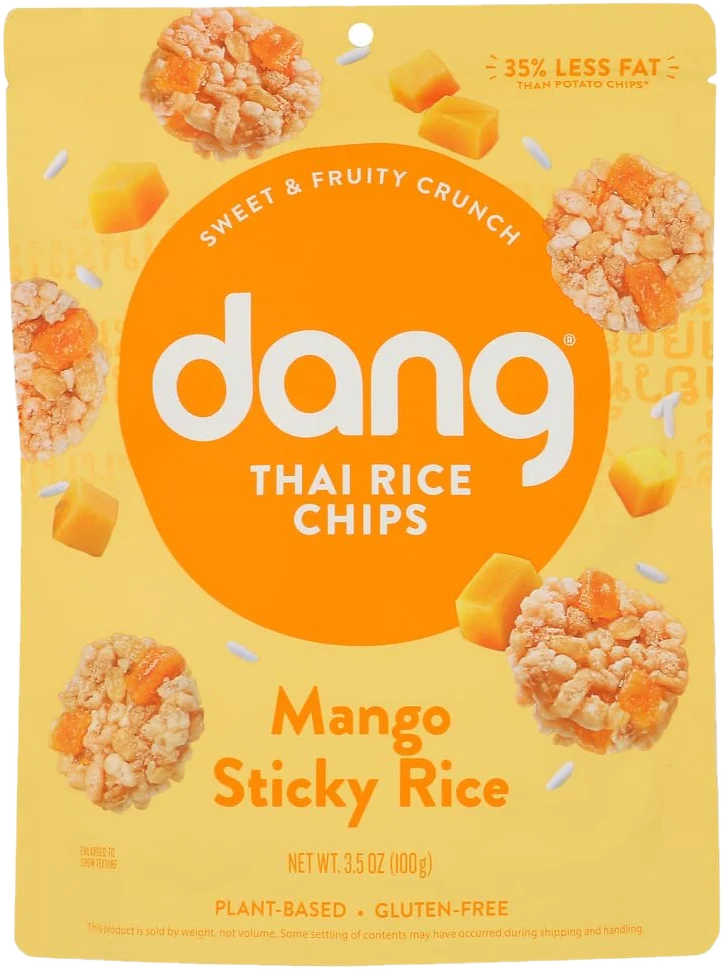 DangMango Sticky Rice Thai Rice ChipsSee the details and price
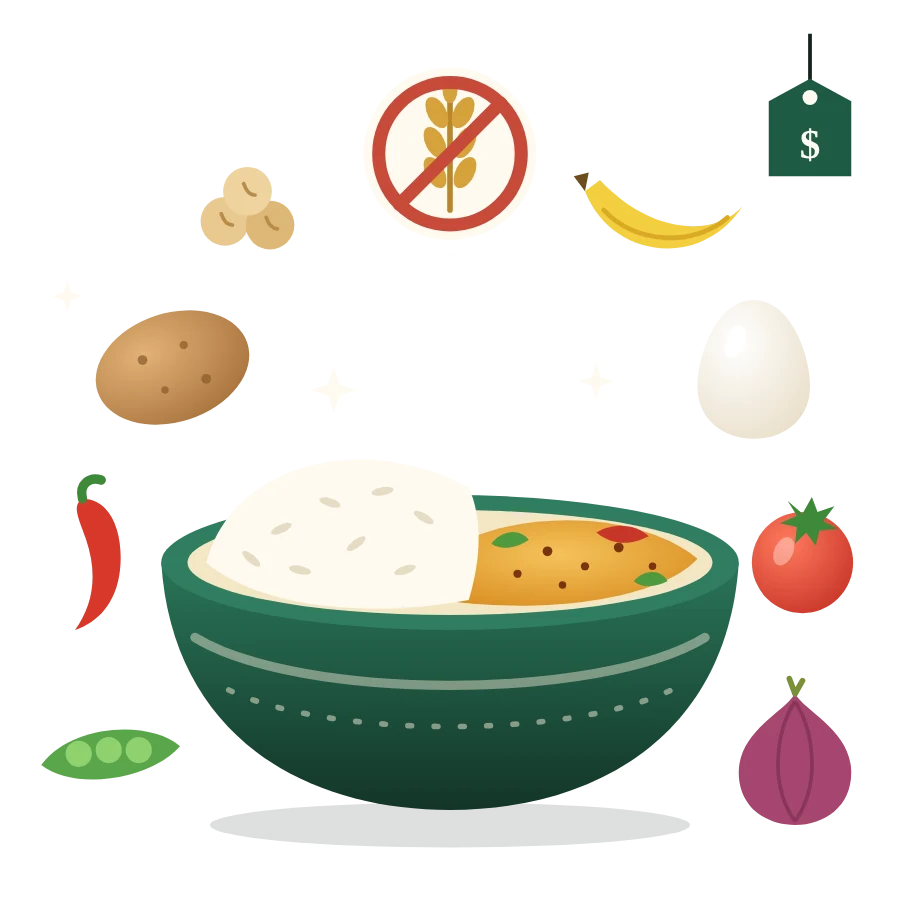 Read nextGluten-free on a budget: how I actually make it workRead the post